|
|
Baton Rouge, Louisiana | |
|
|
School of Renewable Natural Resources |
|
|
|
The B.S. Natural Resource Ecology and Management degree program strives to
teach students about the ecology and natural history of plant and animal
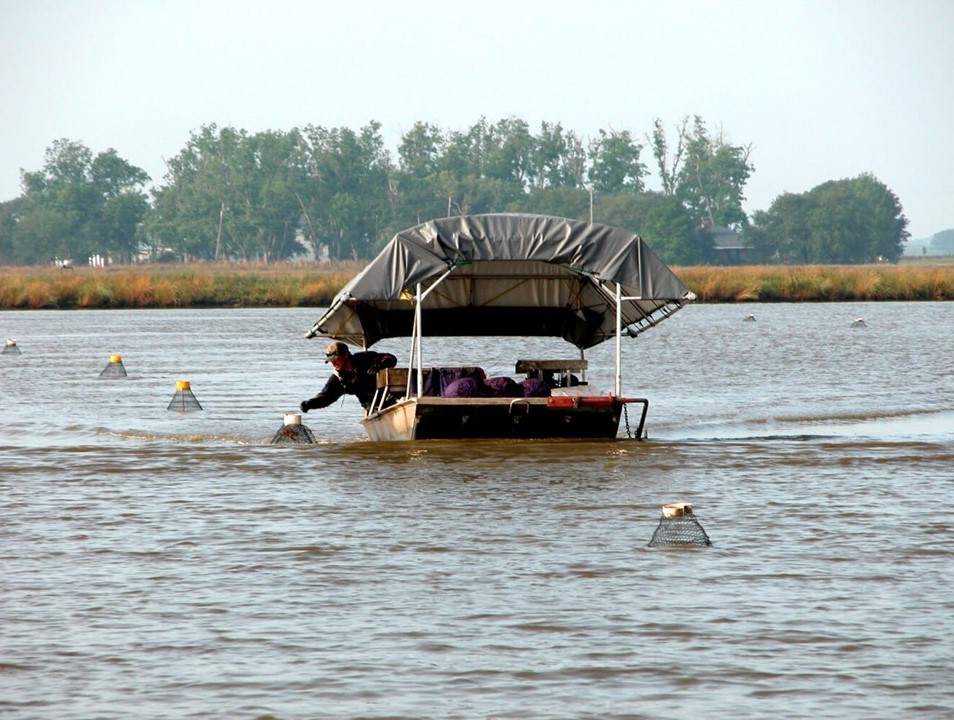
populations and communities to enable enhanced management and conservation Students may choose one of six areas of concentrations. List of approved electives available through the Department. Conservation Biology Area of Concentration The Conservation Biology Area of Concentration is designed to educate students in the ways to protect biodiversity. This includes a broad base of training in ecology, taxonomy, the genetics of small populations, human dimension of resource management, and the principles of population biology. (Click here to view your curriculum and degree path.) Fisheries and Aquaculture Area of Concentration The Fisheries and Aquaculture Area of Concentration exposes students to the ecological and socioeconomic principles related to the conservation and management of aquatic organisms under natural or controlled conditions to provide recreational and commercial benefits to a diversity of stakeholder groups. Students will develop technical and critical thinking skills in preparation for graduate programs in aquaculture or fisheries as well as an exciting career in the field of aquatic science with state and federal agencies, industry, consulting firms, and private resource conservation groups. (Click here to view your curriculum and degree path.)Natural Resource Conservation Area of Concentration
Students in
Natural Resource Conservation focus on sustainability, stewardship,
and understanding the ecology and management of all renewable
terrestrial and aquatic resources, including the multitude of impacts
that humans have on ecosystem
structure and function.
(Click here to view your
curriculum and degree path.)
Wetland Science Area of Concentration The Wetland Science Area of Concentration was designed for students who wish to specialize in wetlands, which are valued as wildlife and fish habitat, for maintaining water quality, and for economic benefits. (Click here to view your curriculum and degree path.) Wildlife Ecology Area of Concentration The Wildlife Ecology Area of Concentration is tailored to students interested in traditional management that focuses on wildlife populations, especially game animals and charismatic species of concern to the public. Students from this area of concentration typically accept jobs with state and federal resource agencies. (Click here to view your curriculum and degree path.) Wildlife Law Enforcement Area of Concentration The Wildlife Law Enforcement Area of Concentration was recently created to meet the needs of students who want to enter into natural resources law enforcement with state of federal agencies. Students get a background in wildlife ecology and management, natural resources policy, as well as course work in political and social sciences. resources policy, and human dimensions of resource management . (Click here to view your curriculum and degree path.)Pre-Vet Wildlife Area of Concentration The Pre-Vet Wildlife Area of Concentration is designed for students interested in Vet School. Students takes SRNR courses with 39 hours of first year Vet School courses completing the BS degree in NREM. (Click here to view your curriculum and degree path.) |
The school offers a wide range of academic programs, basic and applied research, and outreach activities. These programs involve natural resource subjects such as forest biology and management, coastal issues, wildlife, natural fisheries,aquaculture, and many more.Two undergraduate curricula are available that provide students with professional education in various fields of renewable natural resources.Students within both degree programs takec ourses as part of a school core and then select an Area of Concentration.
For more information consult the LSU catalog, or give us a call or e-mail: Undergraduate or Graduate Programs in
Renewable Natural Resources |
|
School of Renewable Natural Resources |